
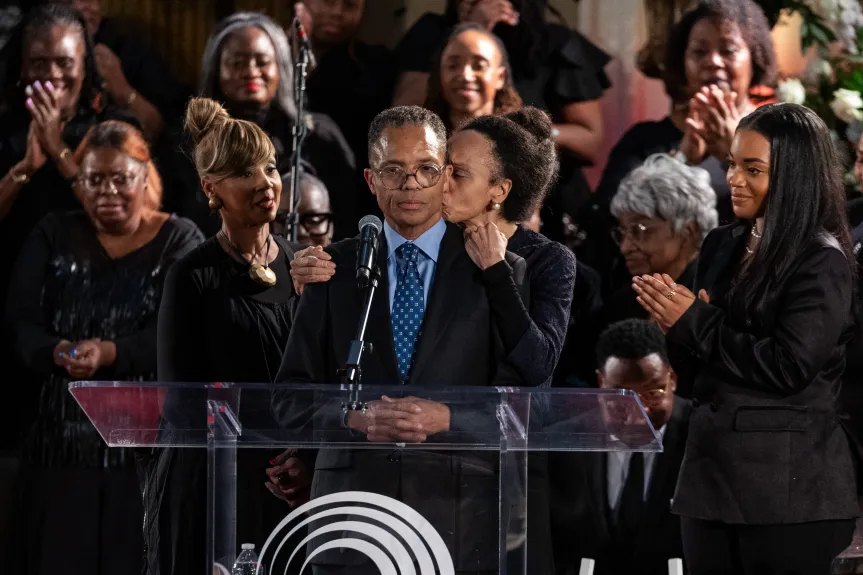
Debate over the legacy of Jesse Jackson intensified after his son, Jesse Jackson Jr., publicly criticized prominent Democrat figures for what he believes was the politicization of his father’s funeral after the family requested not to add politics in the eulogies last month, according to the Independent News.
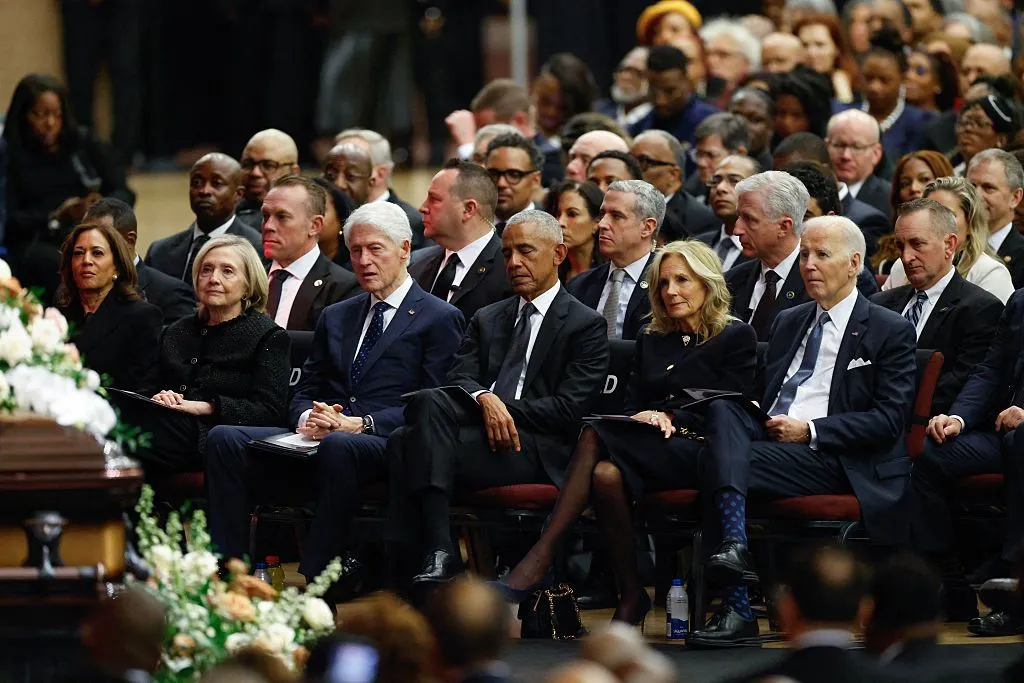
During the televised memorial on March 6th, major political figures such as former President Barack Obama, Joe Biden, Bill Clinton, and former Vice President Kamala Harris reflected on Jackson’s impact on civil rights and American politics.
What Was Said by the Former Presidents?
Highlights of Obama’s Speech:
Barack Obama connected Jackson’s life growing up in the segregated South and his college activism at North Carolina A&T State University to his fight on a much broader scale for civil rights and political participation. Obama noted that Jackson “stood in the tradition of those who believed the promise of America belonged to everybody,” adding that his activism inspired and helped shape him as a young person starting out in community advocacy in Chicago, his children, and generations of leaders and movements.
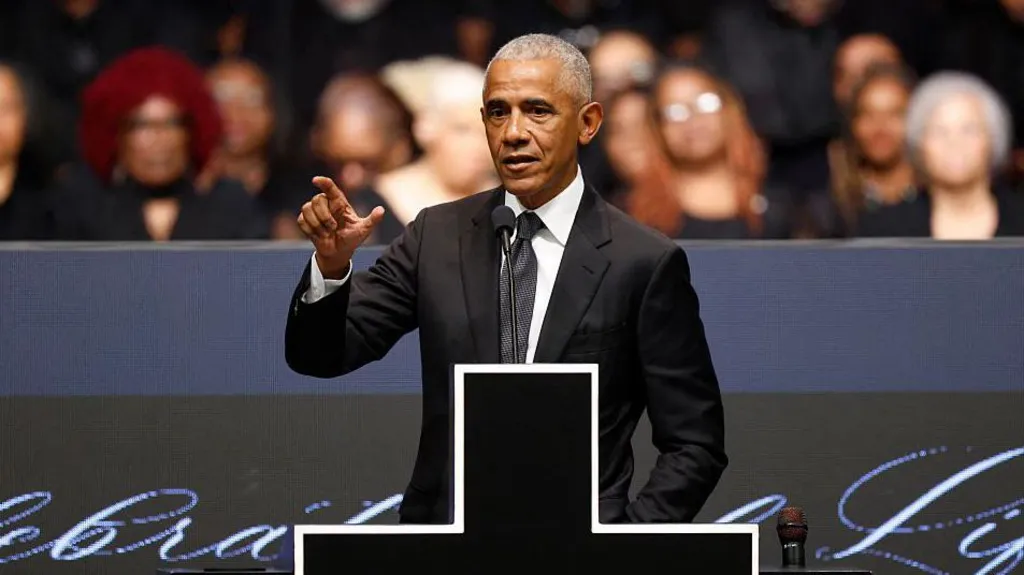
Obama also mentioned the current administration, highlighting bigotry, a setback to the rule of law, cruelty, and the temptation to get discouraged when we are living in a time when it can be hard to hope.
“We are living in a time when it can be hard to hope,” Obama said. “Each day we wake up to some new assault to our democratic institutions. Another setback to the idea of the rule of law, an offense to common decency. Every day you wake up to things you just didn’t think were possible.”
“Each day we are told by folks in high office to fear each other,” said Obama, referring to the current Republican leadership in Washington.
“But this man, Reverend Jesse Louis Jackson, inspires us to take a harder path,” Obama added. “His voice calls on each of us to be heralds of change, to be messengers of hope, to step forward and say, ‘send me,’ wherever we have a chance to make an impact.”
Highlights of Biden’s Speech:
Joe Biden also honored Jackson’s legacy, saying the civil rights leader “never stopped believing that the soul of America could be redeemed.”
Biden mentioned his upbringing in Wilmington, Delaware, a town he said was segregated by law, and hearing about the Civil Rights Movement when he was a kid but not being sure what it was at the time. He highlighted in his speech being self-conscious about doing what’s morally right in reference to the Civil Rights Movement, saying, “But you know what’s right, and you know what’s wrong, and you feel it.”
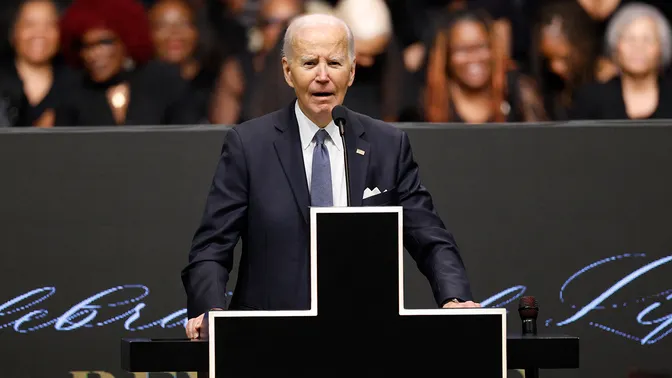
He said that he and Jesse came up together as leaders in the Democratic Party. Despite him and Jesse having very different backgrounds, and in some cases even different views, they never had different views on race.
“Sometimes we went toe to toe. We disagreed on some issues, but that’s what I actually admired most about Jesse, his passion. He was passionate. His passion, the courage of his convictions,” the 46th president added, admiring his passion for service.
Biden mentioned that he came together with Jackson as they walked across the Edmund Pettus Bridge. “When you stand there coming from a state like Delaware, you understand what’s on the other side when they’re waiting there; thugs on horses waiting to beat the living hell out of you,” he said.
Biden mentioned that Jackson used his gifts to influence generations of Americans and countless elected officials, including presidents, “as you see here today [at the funeral],” and thanked his family.
Continuing his remarks while also discussing the Trump administration, Biden added:
“I don’t think things would have been the same if Jesse hadn’t been up, because Jesse decided that his life was ensuring that we never fully walk away from it either.”
“As in bad times, like now. We’re in a tough spot, folks. We got an administration that doesn’t share any of the values that we have, and I don’t think I’m exaggerating a little bit,” the 46th president stated.
Highlights of Clinton’s Speech:
Clinton didn’t speak about politics nor reference anything about the current political climate or the Trump administration, but chose to speak warmly of a man he called a long-time friend. Jackson played a prominent role in the Clinton administration and received a Presidential Medal of Freedom from Clinton in 2000.
Clinton shared the commonality of them growing up with single mothers in the segregated South and traced the beginning of their relationship to them meeting each other for the first time during the 20th anniversary of the integration of Little Rock Central High School, and again during the Little Rock Nine 30th anniversary while he was the governor of Arkansas, and them meeting afterward for dinner.
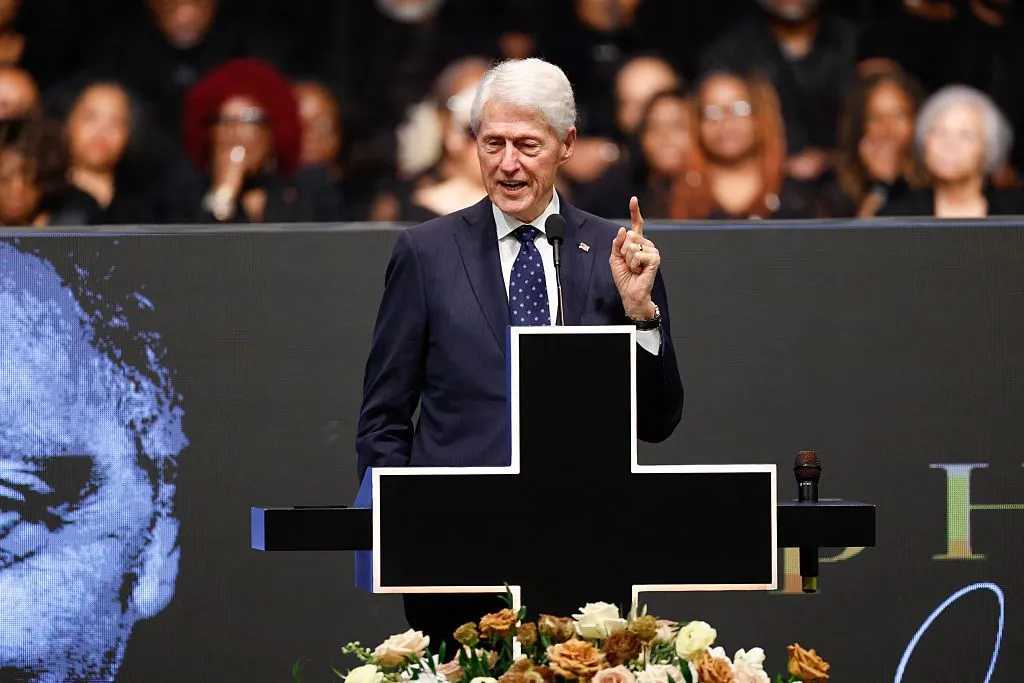
“So we had a big dinner that night, and after the dinner was over, Hillary asked Jesse to hang around so we could talk. We went to the kitchen, put some more food on the counter, and talked ’till midnight. And Hillary said, you know, we all got to work tomorrow. I’m going to bed. Two hours later, Jesse and I are still going about it, and she walks into the kitchen and throws us out,” he jokingly said.
The 42nd president praised Jackson’s decades of activism, describing him as someone who “spent a lifetime giving voice to people who felt they had none.” Clinton also said Jackson’s work helped expand democracy by pushing America to confront inequality and injustice.
He mentioned that his mother liked him and that Jesse mentioned she would appreciate it if he spoke at her service, and he said that it meant something to him for Jesse to ask him to speak at his mother’s memorial services. He even recalled Jesse talking to his daughter over the phone to pray for her to make sure “she had her head in the game” (to see if she was alright) when he was going through his impeachment fight in the 1990s.
“And ever since, Hillary and I went to visit Jesse in the hospital and Jackie and a lot of the family were there, I’ve been thinking about him calling my daughter. He didn’t know if I was going to be president in six months [1996]. He didn’t know what was going to happen, but he liked Chelsea,” he noted.
Clinton told the audience that he made him a better president.
“I’m here more as a friend than a former president,” he said. “He was my friend when I needed him, and I ask you to ask yourself how you can do more by being a better friend.”
Other Speeches
Others who spoke were Al Sharpton and former Vice President Kamala Harris. Rev. Al Sharpton delivered a passionate eulogy for his long-time mentor, Rev. Jesse Jackson, celebrating him as a titan of civil rights, a dedicated teacher, and a “hard taskmaster” who shaped modern activism. Sharpton’s discussed social issues and the Black community downgrading each other, asking what happened to the love for being Black, and honored their long-time bond while emphasizing his big brother’s legacy.
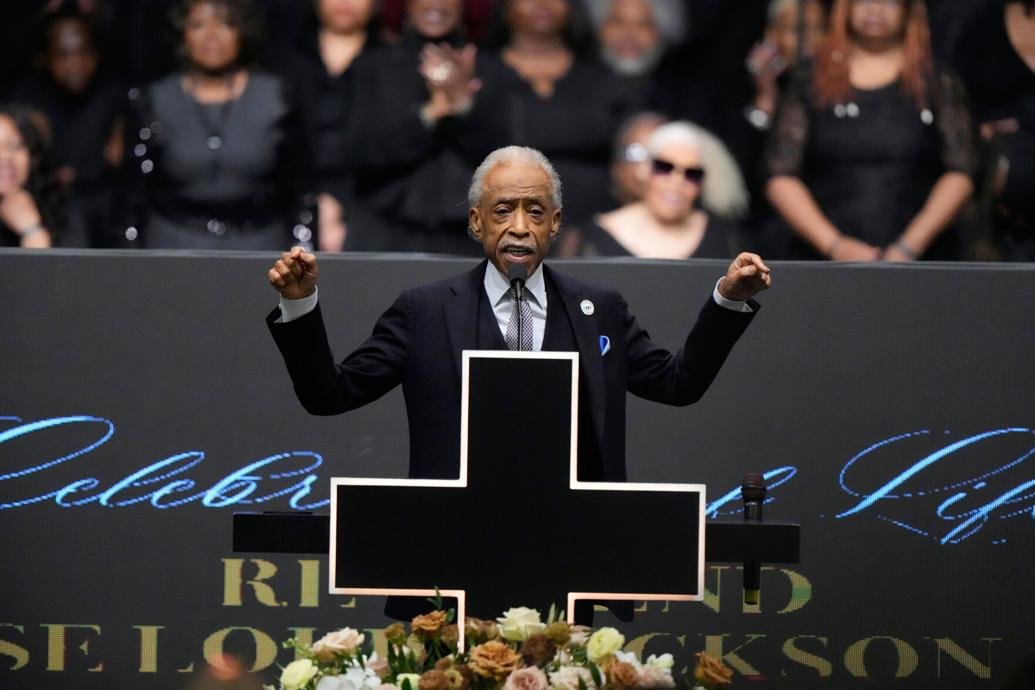
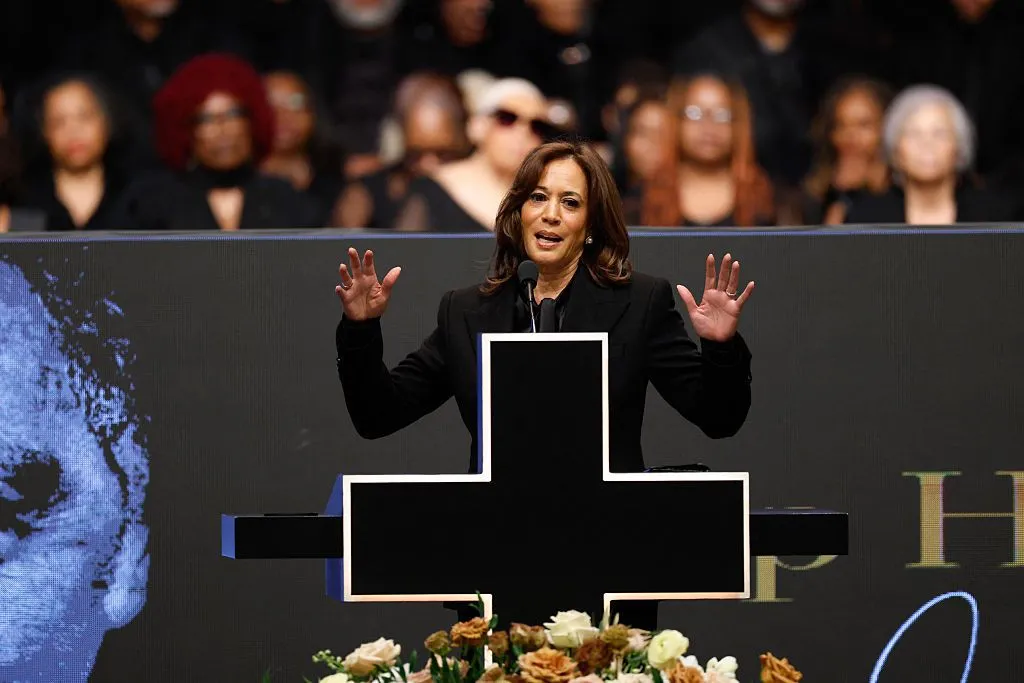
L-R: Jesse Jackson’s long-term friend and mentor, Al Sharpton and Former US Vice President, Kamala Harris, speak during Jesse Jackson Sr’ Public Homegoing Service at the House of Hope in Chicago, Friday, March 6, 2026; Photo Credit: Nam Y. Huh/AP and Kamil Krzaczynski/AFP via Getty Images
Kamala Harris, who started off the speech with “I told you so,” in reference to the current political climate and her foreseeable prediction and warning about what would happen if Trump got elected during her 2024 presidential campaign, went on to speak about Jackson’s work as a civic leader and his influence in her life during her law school days. She praised Jesse Jackson as a visionary strategist who built a powerful “rainbow” coalition, recognizing that the struggles for justice among Black, Latino, Asian American, Native American, LGBTQ+, and disabled communities were interconnected and could reshape American politics. She brought with her two memorabilia buttons from Jackson’s presidential run in 1988 and recalled being a law student driving across the Bay Bridge with a “Jesse Jackson for President” bumper sticker, which inspired her belief that his presidential campaigns paved the way for leaders like herself in her political career.
Jesse Jackson Jr’s Reaction
But for Jackson Jr., those remarks crossed a line. While speaking at a private memorial service on March 7th at the Rainbow PUSH Coalition, the former U.S. Representative for Illinois’s 2nd Congressional District shared the following:
“Yesterday, I listened for several hours to three United States presidents who do not know Jesse Jackson,” said Jackson Jr. “He maintained a tense relationship with the political order, not because the presidents were white or black, but the demands of our message, the demands of speaking for the least of these — those who are disinherited, the damned, the dispossessed, the disrespected — demanded not Democratic or Republican solutions, but demanded a consistent, prophetic voice that at no point in time ever sold us out as people. And it speaks volumes about who the Rev. Jesse Jackson was.”
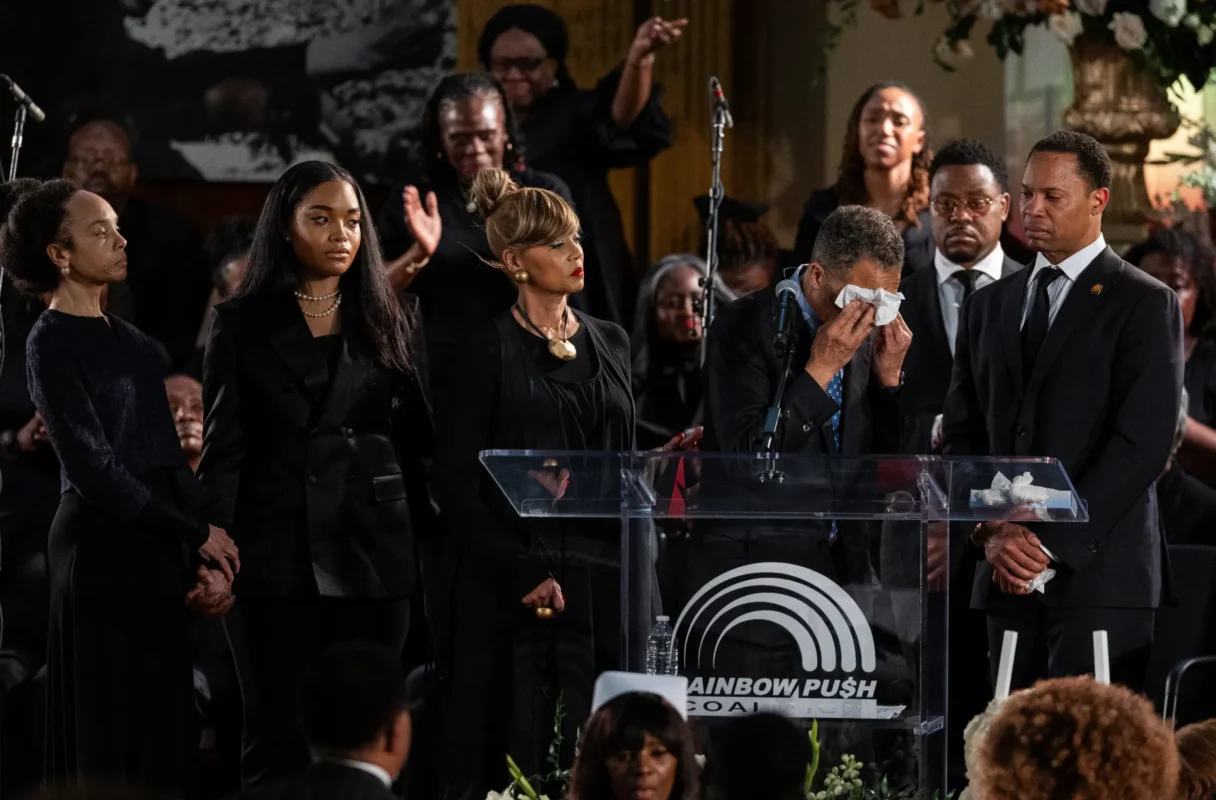
He argued that the funeral should have focused strictly on honoring his father rather than tying the moment to broader political messaging. Speaking out afterward, he suggested the speeches turned a deeply personal occasion into a political platform.
“The funeral of my father should not have been used as a political stage,” Jackson Jr. said, criticizing particularly Obama and Biden for what he described as shifting the focus away from the man being remembered. He argued that the memorial should have remained centered on his father’s life and legacy rather than becoming part of ongoing political narratives.
Trump’s Reaction
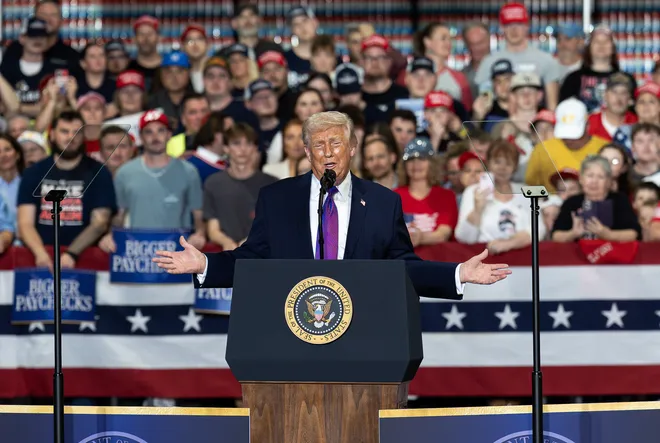
The controversy deepened further when President Donald Trump addressed the situation during a MAGA rally in Kentucky to promote his economic policies and defend the Iran war, using the moment to attack his political rivals. The president seized on Jackson Jr.’s criticism to attack Obama.
“How about Barack Hassan Obama. He went to Jesse Jackson’s funeral, he spoke, and it was like a political hit job, and the family of Jesse Jackson got angry as hell at him, because they understand they [Jackson and Obama] hated each other,” said Trump. “But I loved watching that…the family then goes outside, and they start screaming at him.”
Trump had previously suggested that tensions between Jackson and Obama had existed for years, using the moment to frame the situation as divisions within the Democratic Party. According to the Grio, while Rev. Jackson and Obama’s relationship was tense at times, characterizing their differences as hate is an exaggeration. During his remarks at the funeral, Obama shared that he visited the ailing Jackson before his death.
Trump’s comments illustrate how quickly even solemn events can become political flashpoints. What began as a disagreement over the tone of a funeral evolved into a broader national conversation about legacy, respect, and political messaging.
Debate
At its core, the debate raises a difficult question: When honoring historic figures whose lives were deeply tied to politics, where should the line be drawn between remembrance and political reflection? For some, the speeches were a natural acknowledgment of Jackson’s influence on American political life.
“With all due respect…didn’t Jesse Jackson make everything political?,” achaiken13 tweeted.
While some suggested asking why invite them to speak in the first place and even some critics accusing Jackson Jr’s possibly carrying hidden resentment over him not being pardoned by Biden and Obama for his prior federal charge for taking funds from his campaign account for personal expenses.
KMAPeapol tweeted, “The family invited them. If he wanted a personalized funeral, don’t put celebrities or public figures on program. Besides, they knew 2 of 3 didn’t know Jesse. Miss me with the fake outrage.”
For others, including Jackson Jr., the moment should have remained focused solely on the man himself. An X user who goes by the username Shadewe tweeted, “I agree with Jackson Jr. If they truly knew his father. They would have known there is a time and place for these things. That was not it. You are there to praise them for the good they have done. Not use it for a political stomping ground.”
In the end, the dispute reflects how powerful and complicated the legacy of Jesse Jackson remains. His life stood at the intersection of civil rights, politics, and public service, making it almost inevitable that even his final farewell would spark a conversation about the relationship between history and politics.