
Puerto Rican global superstar Bad Bunny delivered one of the most talked-about halftime performances in Super Bowl history, using the world’s biggest entertainment stage to celebrate Latin and Hispanic culture in a way that was unmistakably authentic and deeply symbolic.
From the moment he stepped onto the field, Bad Bunny made it clear that this performance was about identity, heritage, and representation in addition to music. Opening atop a stage designed to evoke sugar cane fields and traditional Caribbean community scenes, the show wove together imagery from everyday life in Puerto Rico and the broader Latin American experience.
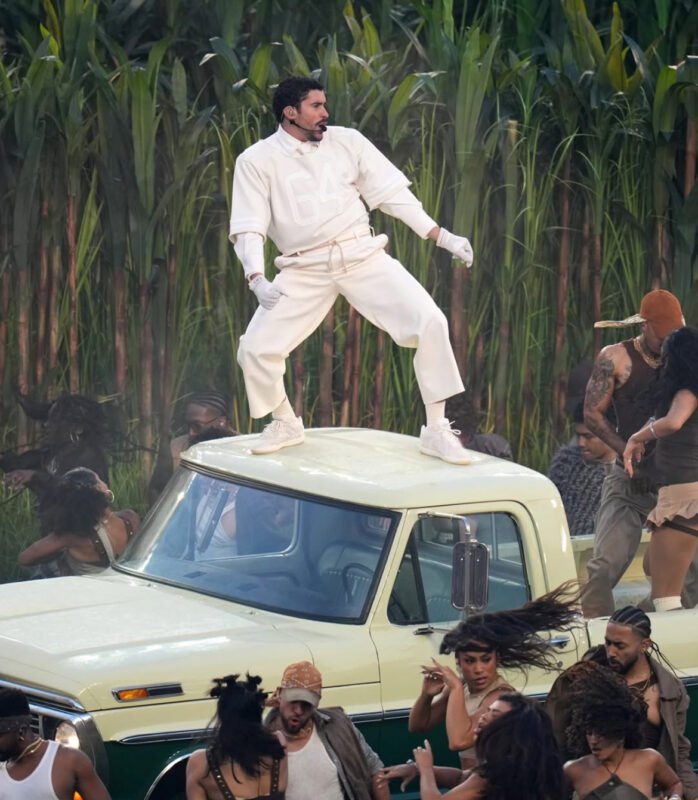
Singing predominantly in Spanish, making him one of the first halftime performers to do so almost entirely, Bad Bunny embraced his linguistic and cultural roots rather than diluting them for a mass audience. His performance sent a broader message to the world’s most prestigious entertainment that Latin and Hispanic culture is central to the American story. Throughout the set, familiar elements like bodegas, neighborhood scenes, and traditional music styles invited viewers into a vibrant cultural world. High-profile cameos from Hispanic and Latin stars, including Ricky Martin, Karol G, Cardi B, Pedro Pascal, Jessica Alba, and others, reinforced the celebration of Hispanic influence in entertainment and music.
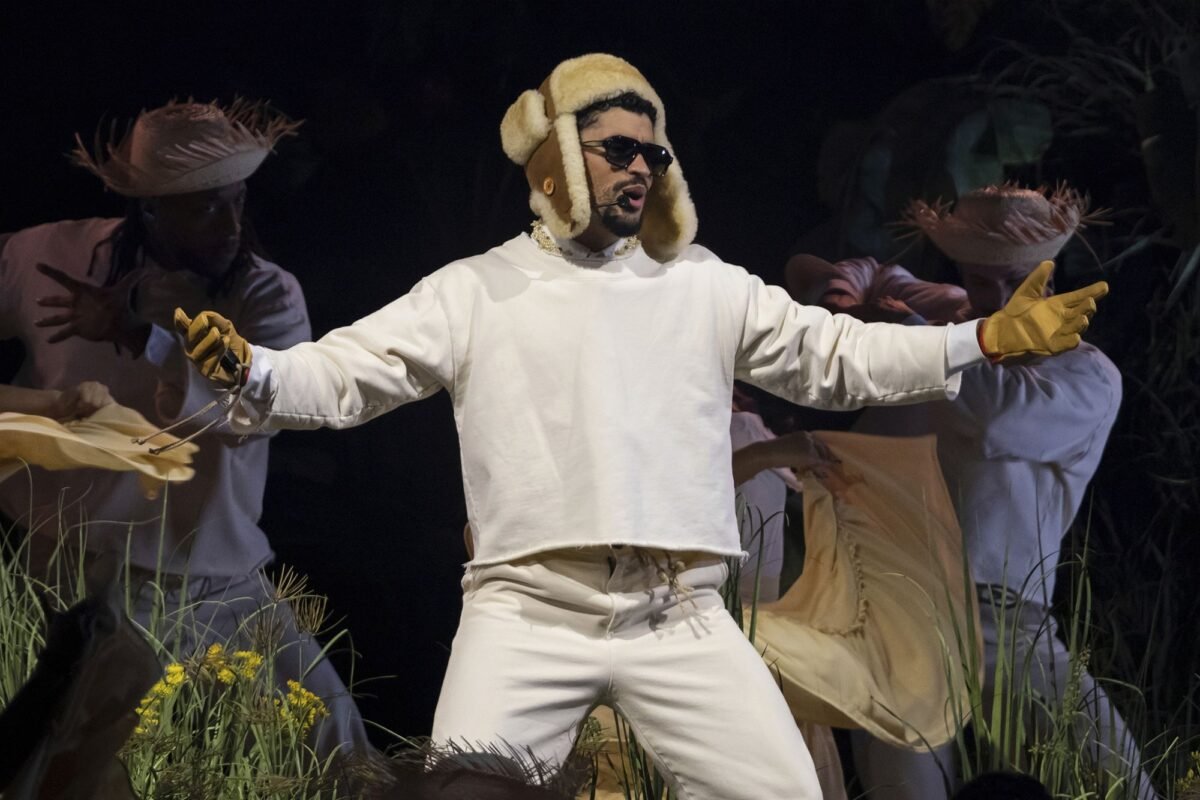
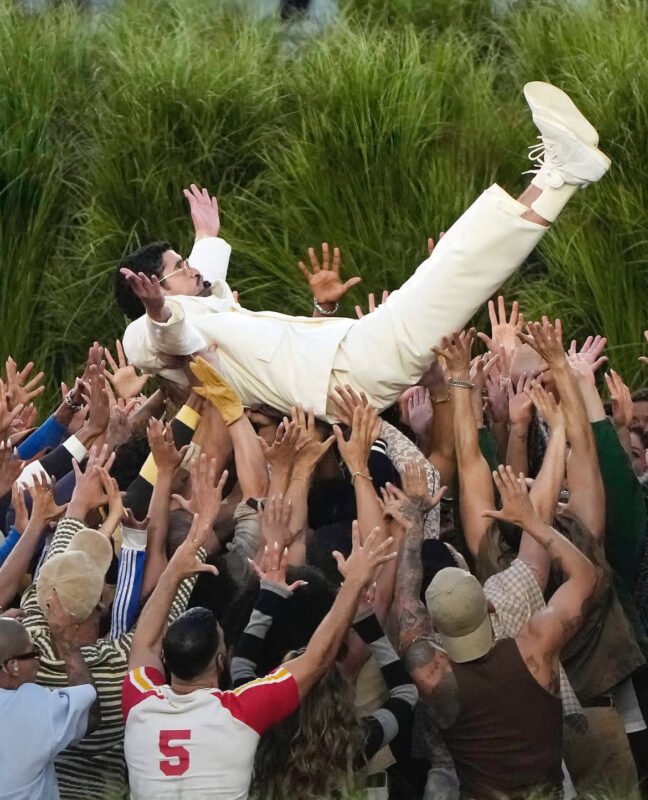
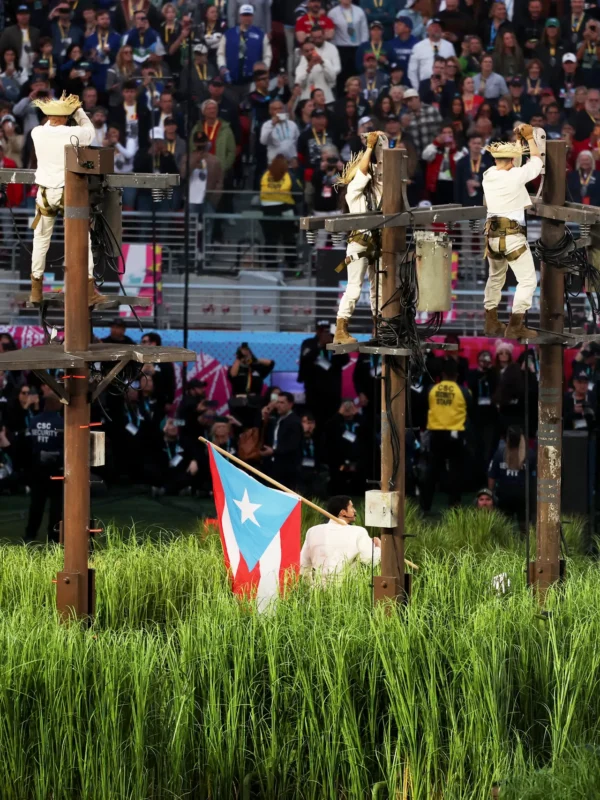
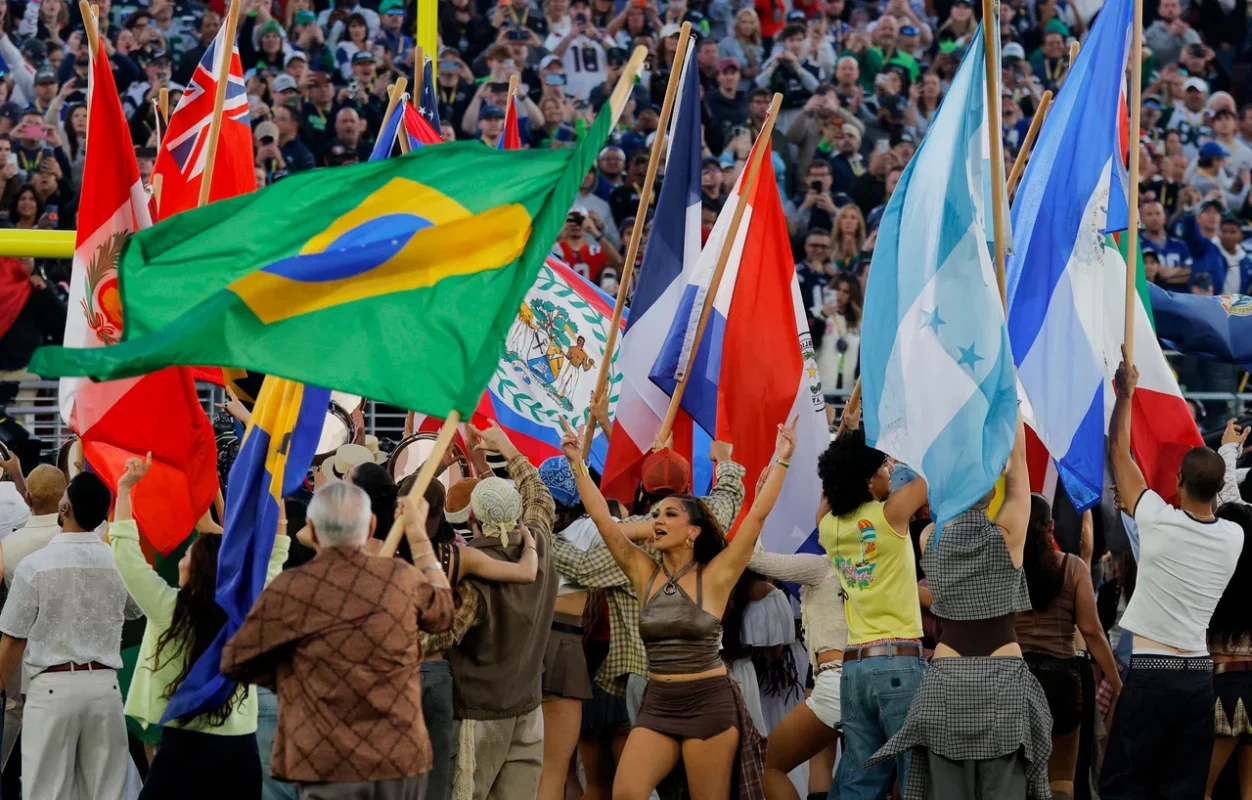
Highlights of Bad Bunny’s Super Bowl halftime performance; Photo Credit: NFL
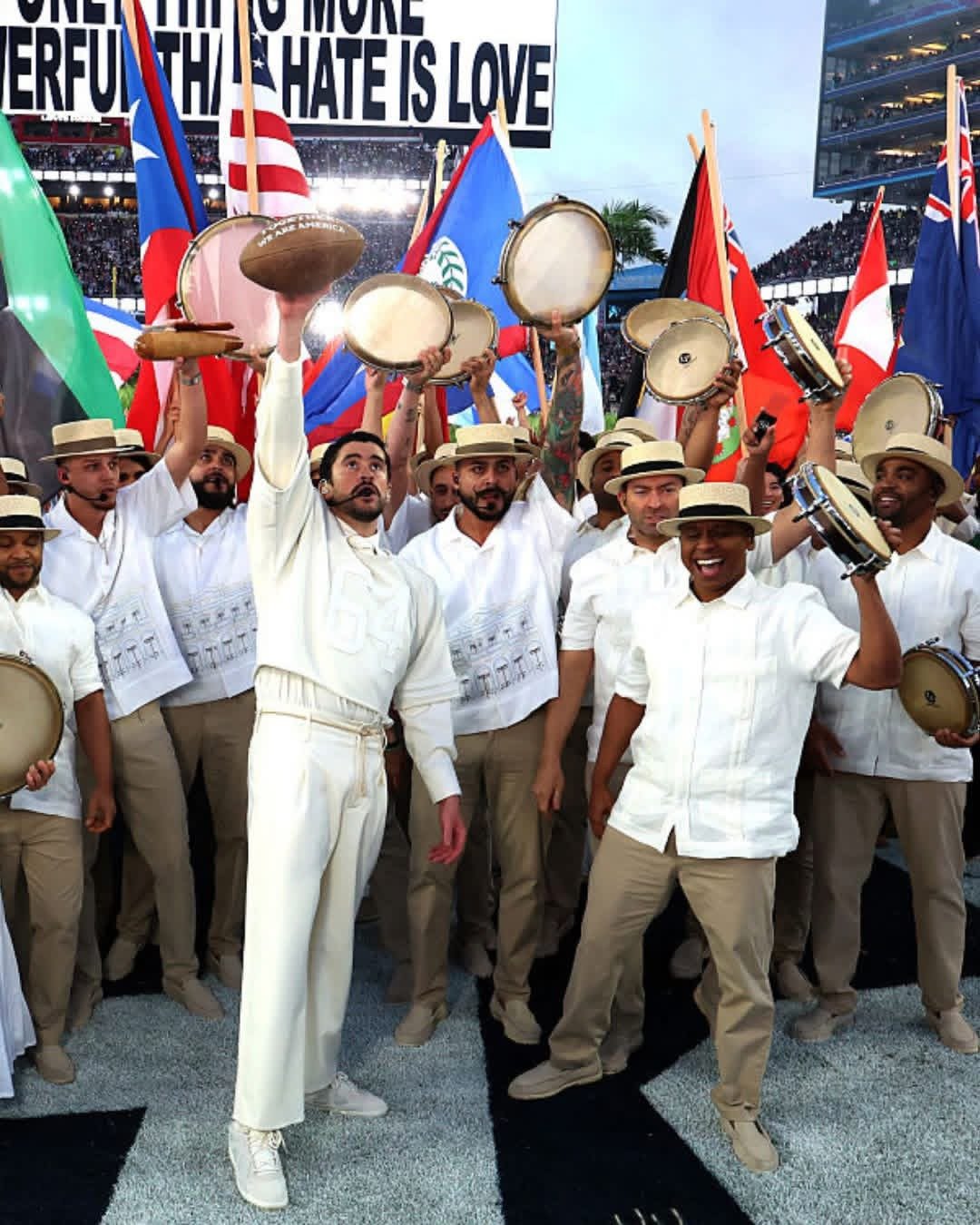
Perhaps the most poignant moment came in the show’s finale, when Bad Bunny paused his musical set to speak. He offered his only English phrase, “God bless America,” then proceeded to name countries from South America up through the Caribbean and North America, emphasizing unity across the hemisphere. Dancers waved the flags of many nations as the phrase “The only thing more powerful than hate is love” appeared on the stadium screens, a visual testament to his intent.
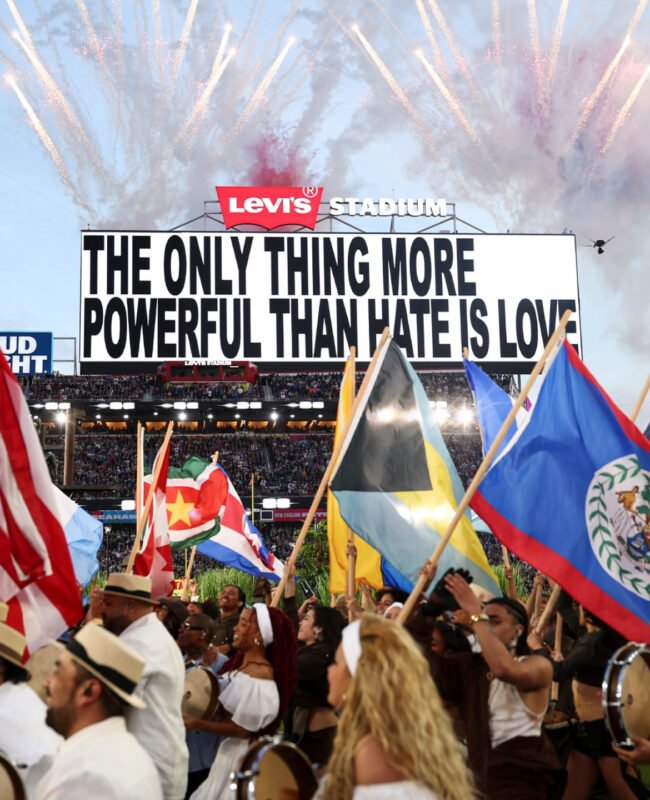
The closing roll call and flag display celebrated geography, and made a statement about belonging, solidarity, and shared history for communities whose contributions to U.S. culture are often overlooked.
The performance unfolded at a time when Hispanic and Latino communities face heightened scrutiny from immigration enforcement under the Trump Administration and ongoing racial discrimination, making national conversations around identity and belonging especially tense. Against that backdrop, Bad Bunny’s refusal to dilute his heritage for mainstream comfort resonated with millions of viewers around the world. The result was a cultural declaration that Latin and Hispanic identities are not on the margins but woven deeply into the fabric of American life and history.