

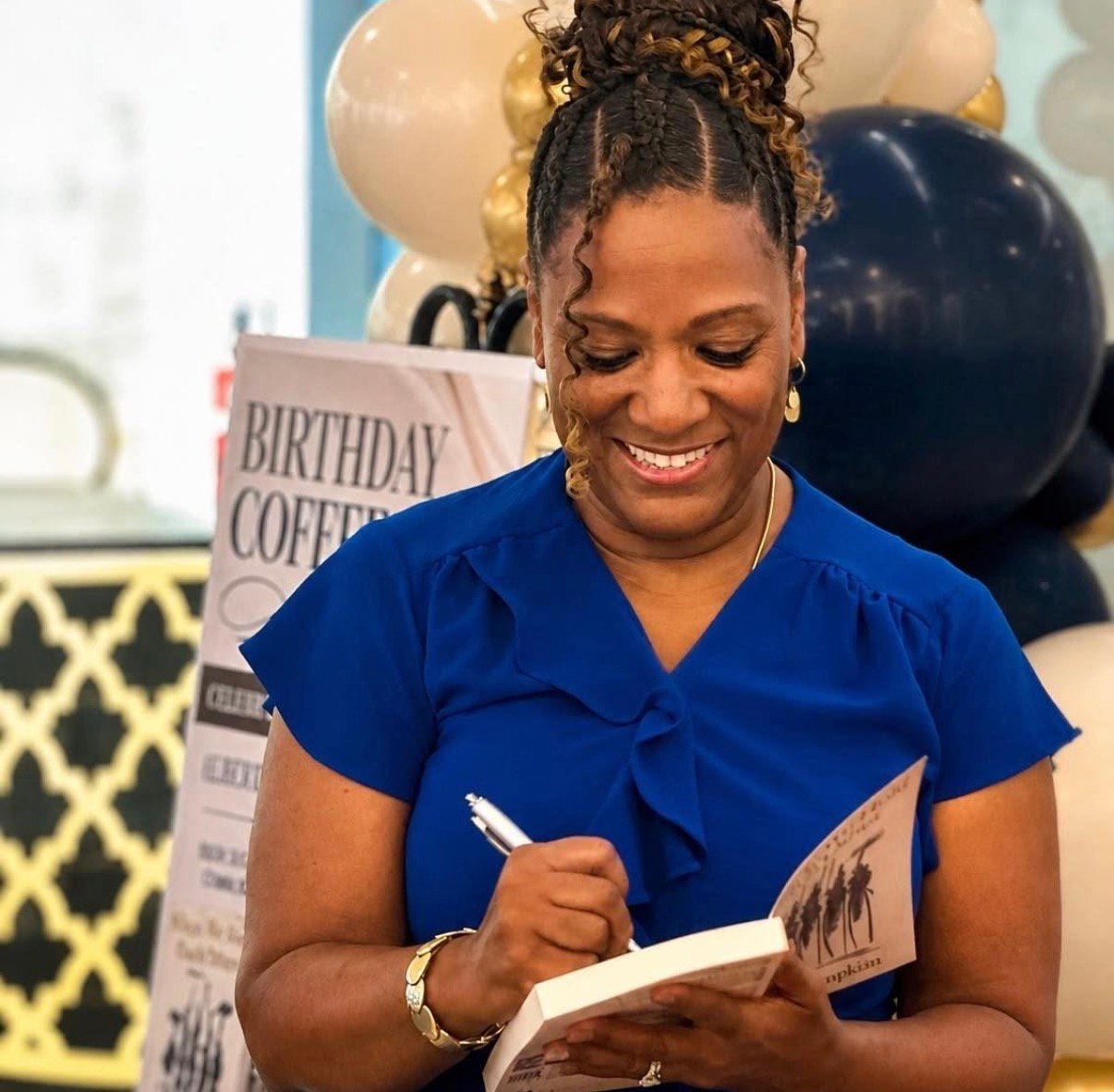
Author Alberta Lampkins recently released her latest book, titled Where We Hold Each Other. What began as Lampkins journaling a few notes with the words “imperceptible fear” flashing through her mind like a red emergency siren led her to birth those words into her fifth book, which explores the transformative power of sisterhood, connection, community, and healing while overcoming one’s own fears.
The book centers around Leha Harrington, a dedicated North Carolina nonprofit entrepreneur known for guiding vulnerable youth, providing them with the stability she herself struggled to receive.
The book includes different chapters that introduce the supporting characters in Leha’s life, such as her friend Safiya and Fayetteville State University professor Chemelu. Both serve as guiding lights who help the main character view life from a different perspective, softening her heart and making her realize that she’s not standing alone.
Through that journey, she mentors Tyashia Harrington, a brilliant but wounded high school senior from Philadelphia, who forces her to see her pain beneath the girl’s tough exterior and to heal herself while steering the young girl on a right path. In addition, the book introduces a long-buried political scandal that resurfaces, putting her business at risk and forcing her to confront her fears on a deeper level.
The Buffalo, New York, native shared with The Exclusive Press (EP) that present fears can shape a person’s mindset and behavior in ways that are hidden in the recesses of our minds and in how we interact with others. Confronting that internal fear and truth can reveal more about oneself and how fear negatively shapes us.
“As a sociologist, educator, mentor, and someone who simply pays attention to people, I began thinking about what we carry quietly and how it influences our relationships, our choices, and the ways we see one another,” Lampkins stated.
“Slowly, characters and stories began to emerge around those thoughts,” she added, while noting that the conversations the book’s characters were carrying were worth sharing.
“I wanted readers to recognize pieces of themselves, their families, their workplaces, and their communities—and perhaps even recognize something in someone they had previously misunderstood,” she stated.
The novel includes pieces of Lampkins’ life from a fictional lens, as well as her life in general, including observing, teaching, mentoring, her husband’s military service and its role in shaping veterans, traveling, and listening to people’s stories.
Elements of Fayetteville were also woven into the story to provide a sense of authenticity through the lens of real places, people, organizations, and community institutions to make the story feel recognizable. The pieces of people she has encountered throughout her life tie into their strength, vulnerability, humor, struggles, and compassion.
“None of the characters represents one particular person, but they carry pieces of human experiences I have witnessed,” she shared.
The circumstances may be fictional, but many of the emotional tones and experiences are vivid.
The book even gives The Exclusive Press founder, Tracey Morrison, a special shout-out. Lampkins recalls her connection to Tracey Morrison, the founder of The Exclusive Press, over ten years ago and reflects on the challenges she faced in becoming a writer.
“There was an idea, a vision of something she wanted to do. Watching that idea grow into what she has created with The Exclusive Press has been amazing.”
Alberta Lampkins
“Mentioning The Exclusive Press was my small way of acknowledging that work and honoring someone whose journey I had the opportunity to witness.”
Lampkins’ goal is to let readers know that this book is intentional in layering individual stories and larger conversations about race, class, faith, mentorship, veterans, family, friendship, belonging, and what can happen when circumstances force us to see life from someone else’s perspective.
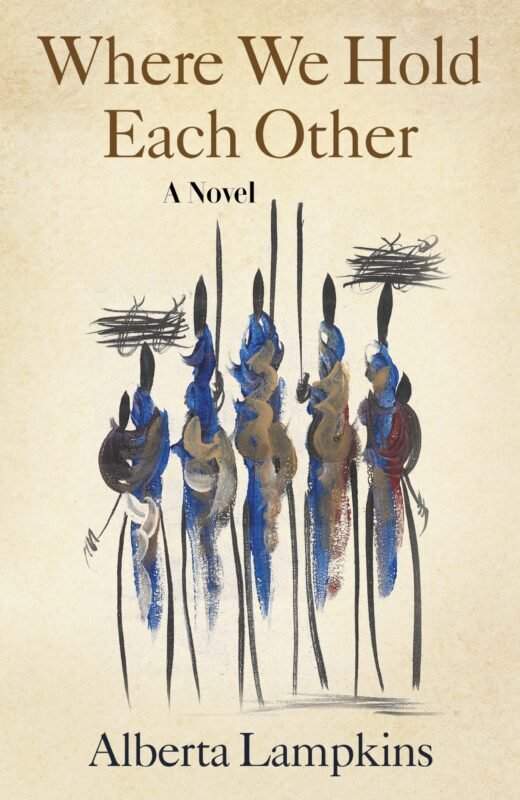
Lampkins even shared that the book cover also carries a significant story. She noted that when it was time to select the book cover, it captured movement, community, connection, and ancestral presence.
“The artwork featured on the cover is an original painting I purchased at an open-air market near a Maasai village during a trip to Kenya. I don’t know the artist’s name, but I was immediately drawn to the movement and sense of community in the painting,” she shared with The EP.
Lampkins hopes for readers to walk away thinking about how and where we hold each other and not to become divisive by race, religion, politics, age, class, geography, or simply by our own experiences. Beneath those differences, people carry things we cannot always see, and I noted that community as a whole requires individuals to be willing to see one another and not operate on the same ideologies.
“I hope they think about mentorship and the difference one person can make by showing up for someone else. I hope they think about the assumptions we make about people. I hope they think about the communities they belong to and whether someone is standing at the edge and needs to be invited in,” she stated.
“And perhaps most importantly, I hope the book reminds readers that none of us becomes who we are entirely on our own.”
This book illustrates the true beauty of holding each other together despite our differences and backgrounds.
Readers interested in purchasing Lampkins’ latest book can do so by clicking on the highlighted link.