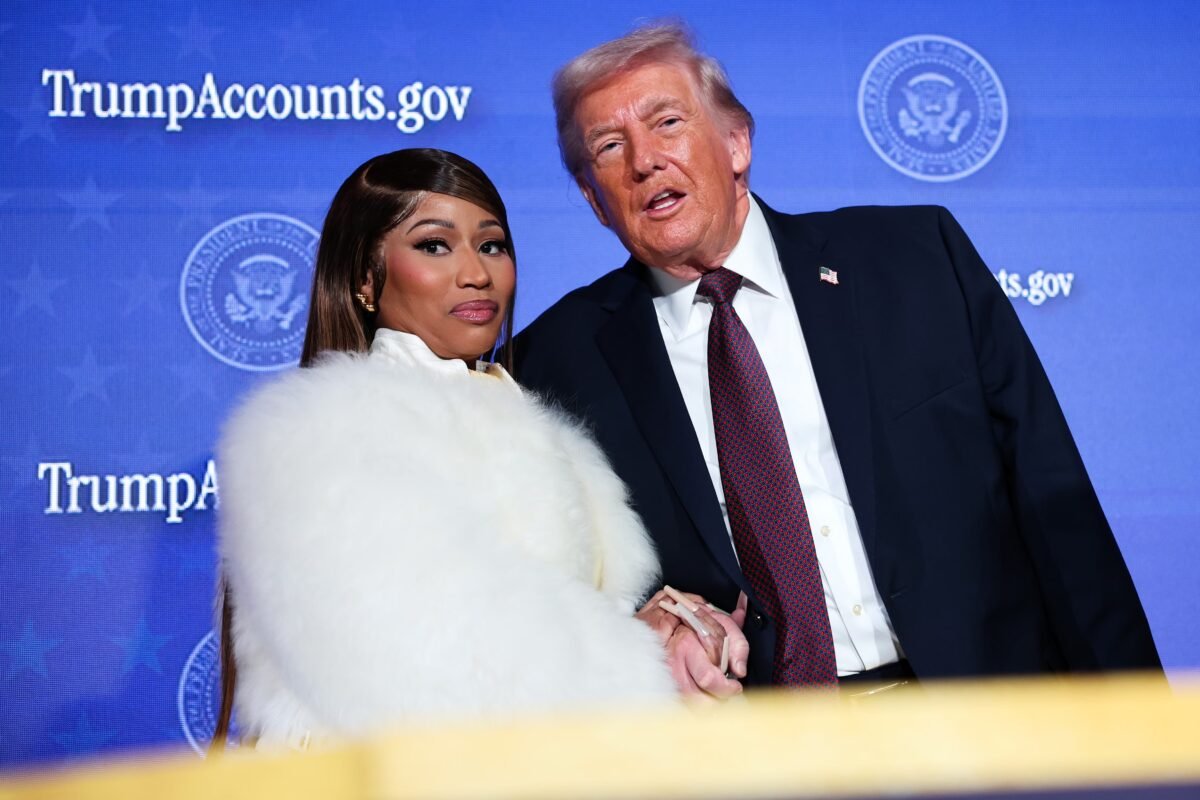


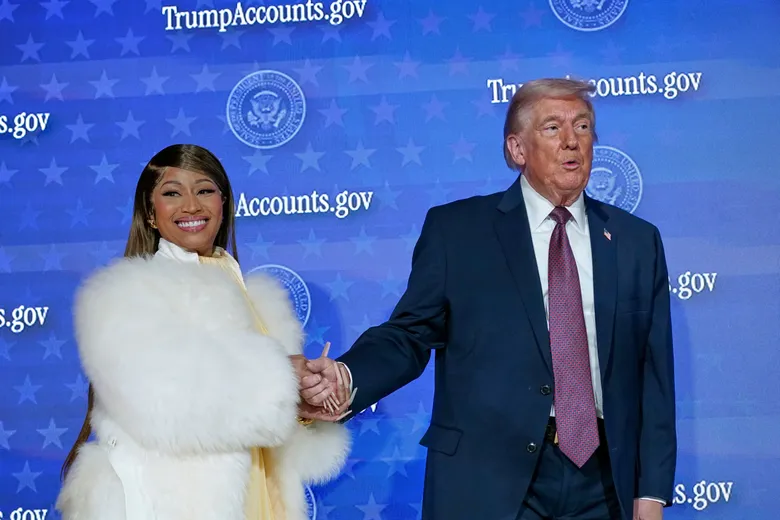
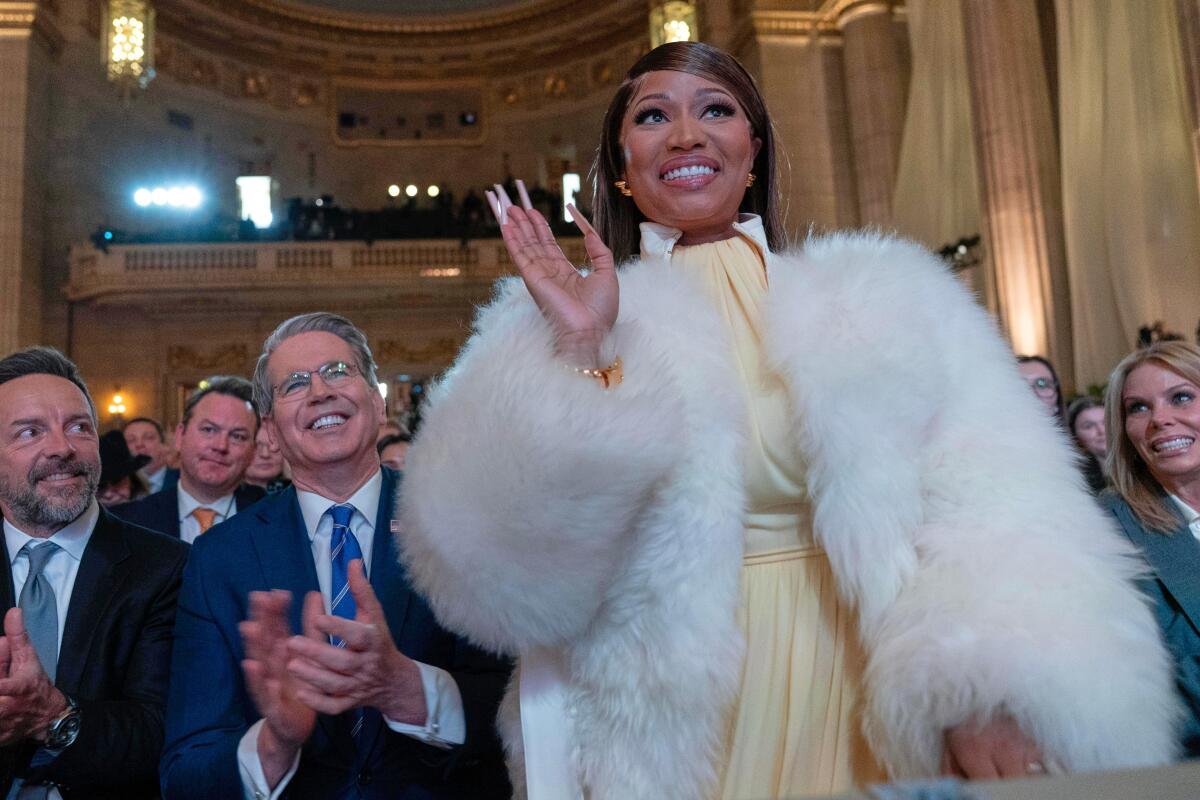
The rapper Nicki Minaj unexpectedly appeared at the White House alongside President Trump to promote “Trump Accounts,” declaring herself his “No. 1 fan,” on January 28th.
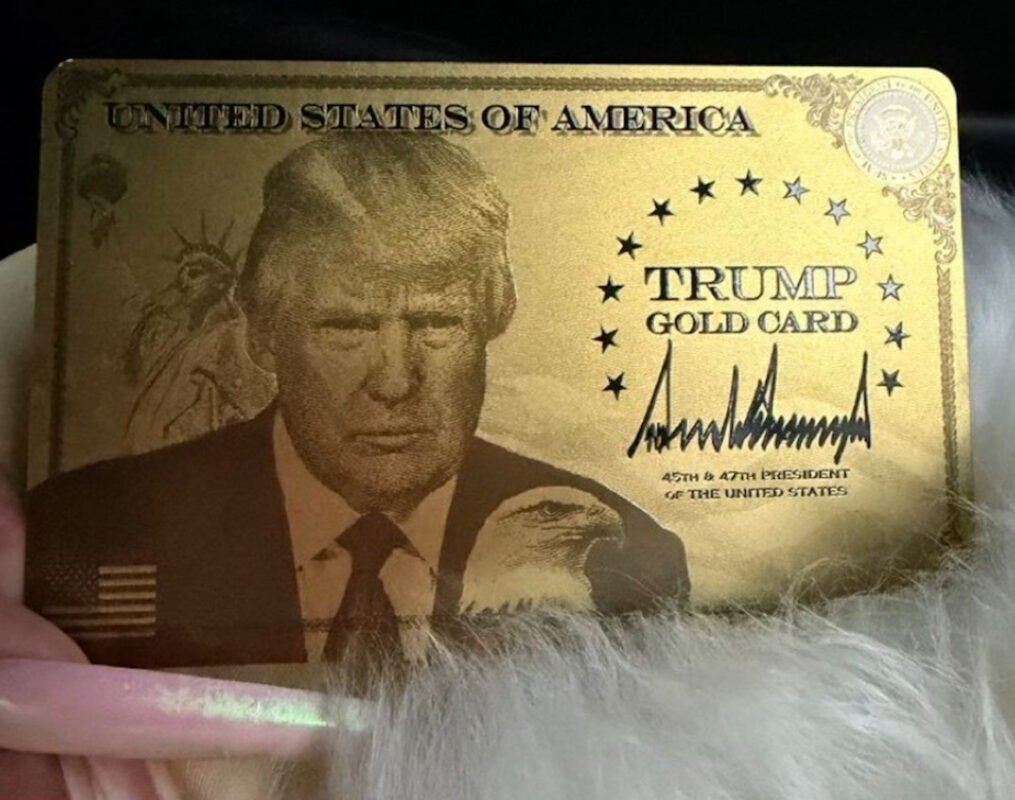
The 43-year-old later took to X to take jabs at petitioners who signed a petition to have her deported to Trinidad and Tobago following her surprise appearance at AmericaFest, hosted by Charlie Kirk’s widow, Erika Kirk. She claimed she received a “gold card” for citizenship.
Nicki Minaj posted an image of Chucky from Child’s Play flipping the middle finger, writing:
“Residency? Residency? The cope is coping.
Finalizing that citizenship paperwork as we speak as per MY wonderful, gracious, charming President.
Thanks to the petition.
I wouldn’t have done it without you.
Oh CitizenNIKA you are thee moment
Gold Trump card free of charge.”
The White House later clarified to The New York Times that the Gold Card Minaj referenced is not what it seems.
According to the outlet, the gold-colored card bearing Trump’s face was simply a “memento” rather than a “visa document,” as described by an anonymous White House official.
A Department of Homeland Security official, also speaking anonymously, told The New York Times that Minaj has been a legal permanent resident of the United States for roughly two decades. It turns out that her post was more of a flex than an actual immigration update.
Minaj, whose real name is Onika Tanya Maraj, was born in Saint James, Port of Spain, Trinidad and Tobago, and moved to Queens, New York City, at age five.
The gold card, which officially debuted last month, is available to would-be immigrants for a nonrefundable $15,000 processing fee.
After applicants are vetted and approved by the Homeland Security Department, they must then pay $1 million to obtain U.S. residency and become lawful permanent residents.
There is also a business version of the program, requiring a $2 million contribution for companies seeking fast-tracked residency for employees through the Trump Corporate Gold Card. After a $15,000 DHS processing fee and background approval, businesses can onboard their preferred candidate, transfer the card between employees for a 5% transfer fee (which includes a DHS background check), and pay a 1% annual maintenance fee.
Immigrant advocates have denounced the program, arguing it unfairly prioritizes wealthy individuals, while others have questioned the legality of the visa program, according to The Seattle Times.