


Knox County Schools banned Alex Haley’s Roots from the schools’ library access within the school district in Knoxville after officials determined that a passage in the novel violated the state’s Age-Appropriate Materials Act. According to Knox County Schools spokesperson Carly Harrington, Chapter 84 of the Pulitzer Prize-winning novel contains language that the state classifies as sadomasochistic under the law. The passage in question describes the rape of an enslaved woman by her master, a depiction school officials argued falls outside the boundaries of what is permitted under Tennessee’s guidelines for educational materials.
The Tennessee Age-Appropriate Materials Act, established in 2022, requires public schools across the state to ensure that books and educational resources are age-appropriate and aligned with a school’s educational mission. Under the legislation, school districts must publish online lists of library materials and create formal policies for reviewing and removing content that’s considered inappropriate for students grade K-12.
The decision to remove Roots has drawn criticism in the Knoxville community on if banning the historical significant of the novel means avoiding the hard conversations about America’s past and that erasing it is not the solution.
Dr. Rev. John Butler, a member of the Knox County School Board, states that certain books are being attacked, questioning why books about us, “African American,” are taken out.
“The way that this has been set up is simply not right. It’s just not right,” Butler said during the school board meeting.
“This time, it’s ‘Roots.’ Next time, it’s going to be a book that you really care about. A book that you really think is important that students have access to. When we start snatching these books off the shelves, that is not a good step for education.”
Others in the community, such as Reverend Reneé Kesler, president of the Beck Cultural Exchange Center, shared the same concerns about balancing age-appropriate education with preserving access to important historical narratives.

“I do remember being a child and watching that miniseries with the world,” Kesler told WATE 6 News.
“There was a lot, and it was overwhelming, but I’ve never forgotten it.”
Kesler acknowledged that portions of Haley’s work may not be suitable for every age group but questioned whether removing the book entirely was the right solution. She mentioned that taking books off the shelf is not accomplishing anything.
“But I think we have to pause and say, is taking books off the shelf accomplishing that, or are we doing harm on another front?”

Kesler further points out that history can make one sad and angry, but one should not condemn, citing that the past is truth, which sets us free. “Because when we know better, we can do better. Our responsibility is to understand history so that it can help inform us for the future,” she stated. Kesler, whose goal is to preserve Haley’s history said that she has the books available at the Cultural Exchange Center for anyone to read.
Published on August 17, 1976, Roots became a groundbreaking literary and cultural phenomenon, chronicling the multigenerational story of Haley’s family beginning during the transatlantic slave trade. The novel went on to win a Pulitzer Prize and was later adapted into the acclaimed 1977 television miniseries, which became one of the most watched programs in American television history, with more than 100 million viewers.
The miniseries was the first visual depiction of slavery, which sparked high media attention at the time on the discussion of the dark reality of slavery African Americans faced.
At the same time, some white viewers admitted they felt uncomfortable, guilty, or shocked by the realities depicted onscreen. Others criticized the series for being “too graphic” or accused it of reopening racial wounds during a period when the country was still navigating the aftermath of the Civil Rights Movement.
Ganell Taylor from the Chicago Defender reacted to the film when it first came out, writing a review dated February 17, 1977, quoting:
“Mr. Haley, I did not watch Roots because I knew I did not want to live through slavery again. I don’t think it helps the Negro American’s image, and we are Americans now after four or five generations. I’m sure it did you a lot of good to write the book. The people that read a big book probably could handle it, but a big spread on television with a lot of already frustrated people watching was very bad for race relations.”
Charlayne Hunter of The New York Times wrote an article, titled “Roots’ Getting a Grip on People Everywhere,” on January 28, 1977, getting viewers’ reactions across the country when it first aired, sparking deep emotional reactions among both Black and white viewers. The story dealt with a combination of viewers who sat in tears, speechless, while others said the show made the brutality of slavery feel more real and painful than anything they had previously read or watched.
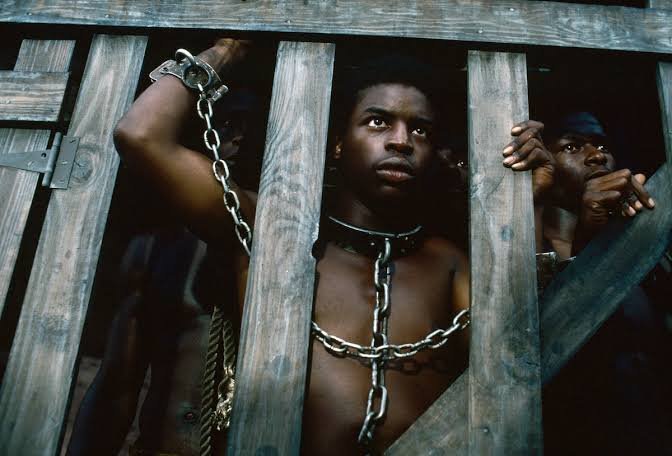
According to the article, a young white boy approached Haley at the time in Texas and told him that his white father had always hated Black people, but after seeing “Roots,” he said, quote, “I watched my father cry for the first time in his life.”
The series at the time opened the door to a long-overdue national conversation about slavery and race relations in America. Now, almost 50 years later since the novel’s release, does banning Roots reflect an attempt by Knox County Schools to cover up the harsh and brutal “the truth hurts” realities of slavery?